Hebrews
Messiah our High Priest, the better covenant, and faith's heroes
New Testament · 13 chapters
Chapter 1
God, having spoken in the past to the ancestors through the prophets, has in these last days spoken to us by his Son, whom he appointed heir of all things and through whom he created the worlds. The Son is the radiance of God's glory and exact representation of his being, superior to angels, as confirmed by quotations from the Psalms and other Scriptures.[1][2]
Chapter 2
The author warns believers to pay closer attention to the message of salvation delivered through the Lord and confirmed by signs and wonders, lest they drift away, since violation of the law spoken by angels brought just retribution.[5][2] Jesus was made lower than the angels for a little while to suffer death and taste death for everyone, now crowned with glory and honor; through his incarnation, he shared in humanity's blood and flesh to destroy the devil's power over death and provide merciful aid as a high priest.[2][1]
Chapter 3
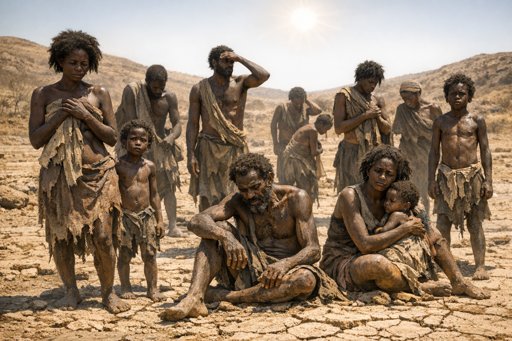
The author warns believers to heed God's voice today, recounting how the Israelites rebelled against Μωϋσῆς (Moses) in the wilderness despite his faithfulness as a servant in God's house, and urges them not to harden their hearts like that generation, which provoked God's anger and failed to enter his rest.[1][2][5][6]
Chapter 4
Hebrews 4 continues the theme of God's rest, warning believers to fear falling short like the Israelites due to unbelief, as the promise of entering God's rest remains open through faith and obedience.[2][4] It presents the word of God as living and active, able to discern thoughts and intentions, and portrays Jesus as the great high priest who sympathizes with human weaknesses, urging confident approach to the throne of grace.[2][4]
Chapter 5
The chapter qualifies the high priesthood, describing how Christ, though a Son, learned obedience through suffering and was perfected to become the source of eternal salvation for those who obey him. It warns against spiritual immaturity, urging progression beyond elementary teachings like repentance and faith toward maturity.[2][5]
Chapter 6
The author urges believers to progress beyond elementary teachings toward maturity, warning that for those enlightened, tasting the heavenly gift, sharing in the Holy Spirit, and experiencing the word of God and powers of the coming age, it is impossible to renew them to repentance if they fall away by crucifying the Son of God again and holding Him up to contempt. The chapter illustrates this with the analogy of fruitful versus thorny ground, expresses confidence in the readers' salvation, and assures them of God's unchangeable promise to Abraham, confirmed by oath, providing strong hope as an anchor for the soul, with Jesus as forerunner entering within the veil.
Chapter 7
The chapter explains the priesthood of **Melchizedek**, king of Salem and priest of **God Most High** (ἐπὶ τοῦ θεοῦ ὑψίστου), portraying him as without genealogy, beginning, or end. It establishes **Jesus** as a priest forever in the order of Melchizedek (κατὰ τὴν τάξιν Μελχισεδέκ), superior to the Levitical priesthood due to its change with a different tribe, impermanent nature, and inability to perfect worshippers.
Chapter 8
Chapter 8 emphasizes the superiority of the new covenant established by Jesus over the old covenant made with Israel, presenting Jesus as the high priest who mediates a better covenant founded on better promises[2]. The author references a prophecy from Jeremiah, explaining that the new covenant involves a transformative internal relationship with God where His laws are written on the hearts of believers[2].
Chapter 9
Hebrews 9 describes the earthly tabernacle under the first covenant, with its Holy Place and Most Holy Place containing the ark of the covenant, golden pot of manna, Aaron’s rod, tablets, and mercy seat, accessible only by the high priest once yearly with blood for atonement.[1][3][4] It contrasts this with Christ entering the heavenly sanctuary once for all through his own blood, securing eternal redemption, purifying consciences, and mediating the new covenant.[1][2]
Chapter 10
Hebrews 10 contrasts the inadequacy of repeated Old Covenant sacrifices, which could not remove sins, with the perfect, once-for-all sacrifice of Jesus Christ, who fulfilled God's will by offering his body and sat at God's right hand, sanctifying believers eternally.[1][3] It exhorts believers to draw near to God with confidence through Christ's blood, hold fast their confession, assemble together, and persevere in faith, warning against willful sin and apostasy.[1][3]
Chapter 11
Hebrews 11 defines faith as the assurance of things hoped for and the conviction of things not seen, then lists Old Testament heroes exemplifying faith: Abel, Enoch, Noah, Abraham, Sarah, Isaac, Jacob, Joseph, Moses and his parents, the Israelites at Jericho, Rahab, and others like Gideon, Barak, Samson, Jephthah, David, Samuel, and the prophets, who through faith performed mighty works, endured trials, and faced persecution without receiving the promise.
Chapter 12
Believers are exhorted to run the race of faith by laying aside sin, fixing eyes on Jesus who endured the cross, and enduring God's discipline as sons, with Esau as a warning against immorality and a root of bitterness.[1][2][3] The chapter contrasts the terrifying Mount Sinai (Σινᾶ) of the old covenant with joyful Mount Zion (Σιών), the heavenly Jerusalem and unshakable kingdom, urging reverence since Theos is a consuming fire.[1][2][3]
Chapter 13
Hebrews 13 exhorts believers to continue in brotherly love, hospitality to strangers, remembrance of prisoners and the mistreated, marital purity, contentment without love of money, remembering leaders and imitating their faith, and adherence to unchanging Jesus Christ as the same yesterday, today, and forever, while offering sacrifices of praise and obeying leaders.[1][2][3][5]