Revelation
Visions of the Lamb, judgment, and the new Jerusalem
New Testament · 22 chapters
Chapter 1
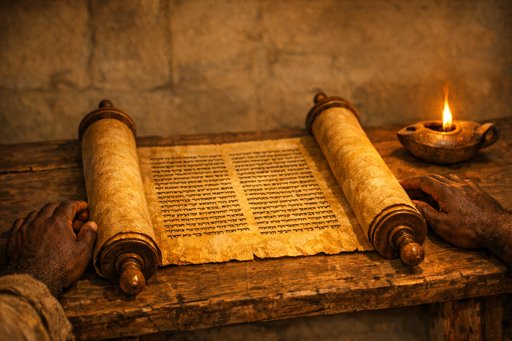
Iōannēs receives the apokalypsis of Iēsous Christos on Patmos, commanded by a loud voice to write what he sees in a biblion to the seven ekklēsiai. He turns to see one like a huios anthrōpou, glorified with eyes of fire, voice as rushing waters, holding seven starrōn and a rhomphaia oxeia, who declares 'Egō eimi to Alpha kai to Ōmega.'
Chapter 2
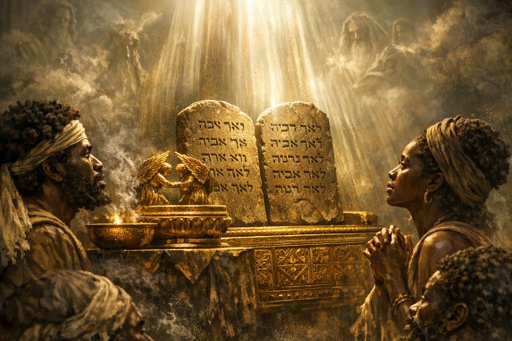
Jesus addresses the seven churches with messages of commendation and correction, calling each to repentance and promising rewards to those who overcome. The churches addressed are Ephesus (called to renew their first love), Smyrna (encouraged to remain faithful unto death), Pergamum (warned against false teaching), and Thyatira (rebuked for tolerating false prophetess Jezebel).
Chapter 3
Letters from Christ to the churches in Sardis, Philadelphia, and Laodicea: Sardis is warned as spiritually dead despite appearing alive and urged to wake up; Philadelphia is commended for endurance and promised an open door; Laodicea is rebuked as lukewarm and self-satisfied, facing rejection unless repentant.[3][2]
Chapter 4
John sees a door open in heaven and hears a voice calling him up, where he beholds the throne of God surrounded by twenty-four elders and four living creatures, all worshiping YHWH and the Lamb in ceaseless praise.[1][2][3]
Chapter 5
John sees a sealed scroll in the right hand of the One on the throne, which no one in heaven or earth is worthy to open. The Lamb (*Arnion*), slain yet standing, takes the scroll amid worship from elders, angels, and creatures proclaiming its worthiness.
Chapter 6
The Lamb opens the first six seals on the scroll, unleashing the four horsemen—white (conquest), red (war), black (famine), and pale (death)—followed by the fifth seal revealing martyred souls under the altar crying to the Lord, holy and true, for vengeance and receiving white robes to rest until their number is complete[1][3]. The sixth seal triggers cosmic disturbances: a great earthquake, sun black as sackcloth, moon like blood, falling stars, receding sky, and displaced mountains and islands, prompting all people to hide from the face of Him on the throne and the wrath of the Lamb[1][2][3].
Chapter 7
Four angels hold back the winds until 144,000 servants are sealed on their foreheads from the twelve tribes of Israel. A great multitude from every nation worships before the throne and the Lamb, attributing salvation to our God and the Lamb.
Chapter 8
The Lamb opens the seventh seal, resulting in silence in heaven for half an hour, after which seven angels receive trumpets and another angel offers incense with the prayers of the saints before casting fire from the altar to earth, causing thunder, lightning, and an earthquake. The first trumpet brings hail, fire, and blood that burn up a third of the earth, trees, and all green grass; the second trumpet hurls a burning mountain into the sea, turning a third of it to blood, killing a third of sea creatures and destroying a third of ships; the third trumpet causes the star Apōsinthēs (Wormwood) to fall, embittering a third of rivers and springs.
Chapter 9
The fifth trumpet unleashes demonic locusts from the abyss under Abaddon/Apollyon, tormenting unsealed humans for five months without killing them, while the sixth trumpet releases four angels at the Euphrates to lead a 200-million-strong cavalry army that kills a third of mankind with fire, smoke, and brimstone.[1][2][3] Despite these woes, survivors refuse to repent of idolatry, demon worship, murders, sorcery, immorality, and thefts.[3]
Chapter 10
A mighty angel standing on sea and land swears that there will be no more delay, and that the mystery of God will be finished when the seventh angel sounds his trumpet[1][2]. John is instructed to take and eat a little scroll from the angel's hand, which tastes sweet in his mouth but turns bitter in his stomach, after which he is commissioned to prophesy again about many peoples, nations, languages, and kings[1][2].
Chapter 11
John measures the temple of God and the altar, excluding the outer court; two witnesses prophesy for 1,260 days in sackcloth, protected by fire from their mouths, power to shut the heavens, turn waters to blood, and strike with plagues.[1][2][4] The beast from the Abyss kills them after their testimony, their bodies lie unburied in the great city (Sodom, Egypt, where the Lord was crucified) for three and a half days; God resurrects and ascends them to heaven amid an earthquake killing 7,000, the seventh trumpet sounds proclaiming God's kingdom, judgment, rewards, and wrath, opening the heavenly temple revealing the ark with lightning, thunder, earthquake, and hail.[1][2][4]
Chapter 12
John witnesses a vision of a woman clothed with the sun (representing Israel) who gives birth to a male child (Jesus Christ), while a great red dragon (Satan) stands ready to devour Him[1][2]. After Christ's ascension to God's throne, war breaks out in heaven where Michael and his angels defeat the dragon and cast Satan down to earth, where he wages war against the woman and her offspring, though God protects Israel in the wilderness for 3.5 years[1][2][3].
Chapter 13
Revelation 13 describes two beasts used by Satan (the dragon) in his war against God's people: the first beast rises from the sea with seven heads and ten horns, receives a mortal wound that is miraculously healed, and is worshiped by the world[1][4]. The second beast rises from the earth with two horns like a lamb but speaks like a dragon, performs deceptive signs and miracles, and enforces worship of the first beast through an image and a mark (the number 666) required for buying and selling[1][3][4].
Chapter 14
One like the Son of Man on a cloud reaps the earth's harvest with a sickle, followed by an angel gathering the vine of the earth for judgment in the winepress of God's wrath, producing blood flowing as high as horses' bridles for 1,600 stadia.
Chapter 15
John witnesses seven angels emerging from the heavenly temple, clothed in pure linen and girded with golden bands, each given seven golden bowls filled with the wrath of God.[1][2] The temple fills with smoke from God's glory and power, signifying that judgment is now irreversible and no one can enter until the seven plagues are completed.[1][2]
Chapter 16
A loud voice from the temple commands seven angels to pour out the bowls of God's wrath: the first causes sores on beast-marked worshipers, the second turns the sea to blood, the third rivers and springs to blood, the fourth scorches with sunfire, the fifth darkens the beast's kingdom, the sixth dries the Euphrates for eastern kings while demonic spirits gather rulers to Har-Magedon, and the seventh triggers thunder, lightning, a massive earthquake splitting the great city, falling cities, fleeing islands, and huge hailstones, with the declaration 'It is done!' amid unrepentant blasphemy.[1][2][6]
Chapter 17
An angel reveals to John a vision of a prostitute (representing religious Babylon) sitting on a scarlet beast with seven heads and ten horns, adorned in purple, scarlet, gold, and precious stones, who has seduced the kings of the earth.[1][2] The angel explains that the ten horns represent ten kings who will give their authority to the beast, but will ultimately turn against and destroy the prostitute, fulfilling God's purpose as revealed in His word.[1][2]
Chapter 18
An angel proclaims the fall of Babylon the great, describing her as a dwelling place of demons and unclean spirits, destroyed in a single day for her sins of sexual immorality, idolatry, and luxurious living that corrupted the nations and kings of the earth.[1][2] The chapter depicts the mourning of merchants, kings, and seafarers who grew rich from her wealth as they witness her destruction by fire, while a heavenly voice calls God's people to come out of her and not share in her plagues.[2][3]
Chapter 19
Revelation 19 describes the victorious second coming of Christ, who appears as a royal conqueror clothed in a robe dipped in blood, leading the armies of heaven to defeat the beast (Antichrist) and the false prophet, casting them alive into the lake of fire.[1][2][3] The chapter opens with heavenly multitudes praising God for judging Babylon and avenging the blood of His servants, and concludes with Christ's complete victory over the earthly armies gathered against Him.[1][3]
Chapter 20
An angel binds the dragon—identified as the ancient serpent, the devil, and Σατανᾶς (Satanas)—for a thousand years in the bottomless pit to prevent him from deceiving the nations, during which martyred saints reign with Christ in the first resurrection.[1][2] After the millennium, Σατανᾶς is released, deceives Gog and Magog for battle, is defeated by fire from heaven, and cast into the lake of fire; the Great White Throne judgment follows, where the dead are judged by their works and the Book of Life, with Death, Hades, and the unsaved thrown into the lake of fire.[1][2]
Chapter 21
John sees a **new heaven and new earth**, with the holy city, **New Jerusalem**, descending from heaven as the dwelling place of **Theos** (God) and His people, where He wipes away every tear, ends death and pain, declares 'It is done,' offers the water of life to the thirsty, promises inheritance to overcomers, and warns the wicked of the lake of fire.[1][2] The city features walls of jasper, twelve pearl gates named for Israel's tribes, foundations with apostles' names, streets of transparent gold, no temple since **Kurios Theos ho Pantokrator** (Lord God Almighty) and the **Arnion** (Lamb) are its temple, divine glory as light with no need for sun or moon, open gates, and entry only for those in the Lamb's book of life.[1][2]
Chapter 22
An angel shows John the river of the water of life flowing from the throne of God and the Lamb in the New Jerusalem, flanked by the tree of life for healing the nations, with no more curse, direct sight of God's face, His name on servants' foreheads, no night, and eternal reign.[1][3] Jesus affirms His soon return with rewards, identity as Alpha and Omega, blesses the faithful, invites the thirsty to free water of life via the Spirit and Bride; John is corrected for angel worship, with final warnings against adding or subtracting from the prophecy, Jesus' 'I am coming soon,' and benediction.[1][3]